What Is It Used For?
Developed primarily to help swallowed hair move through the gastrointestinal tract and be eliminated naturally in cats.
VETWEL® PRODUCT INFORMATION
MALT PASTEVetWel® Malt Paste combines oils, fiber, and prebiotic ingredients to support the natural gastrointestinal passage of swallowed hair, normal intestinal motility, and gastrointestinal wellness, especially in cats.
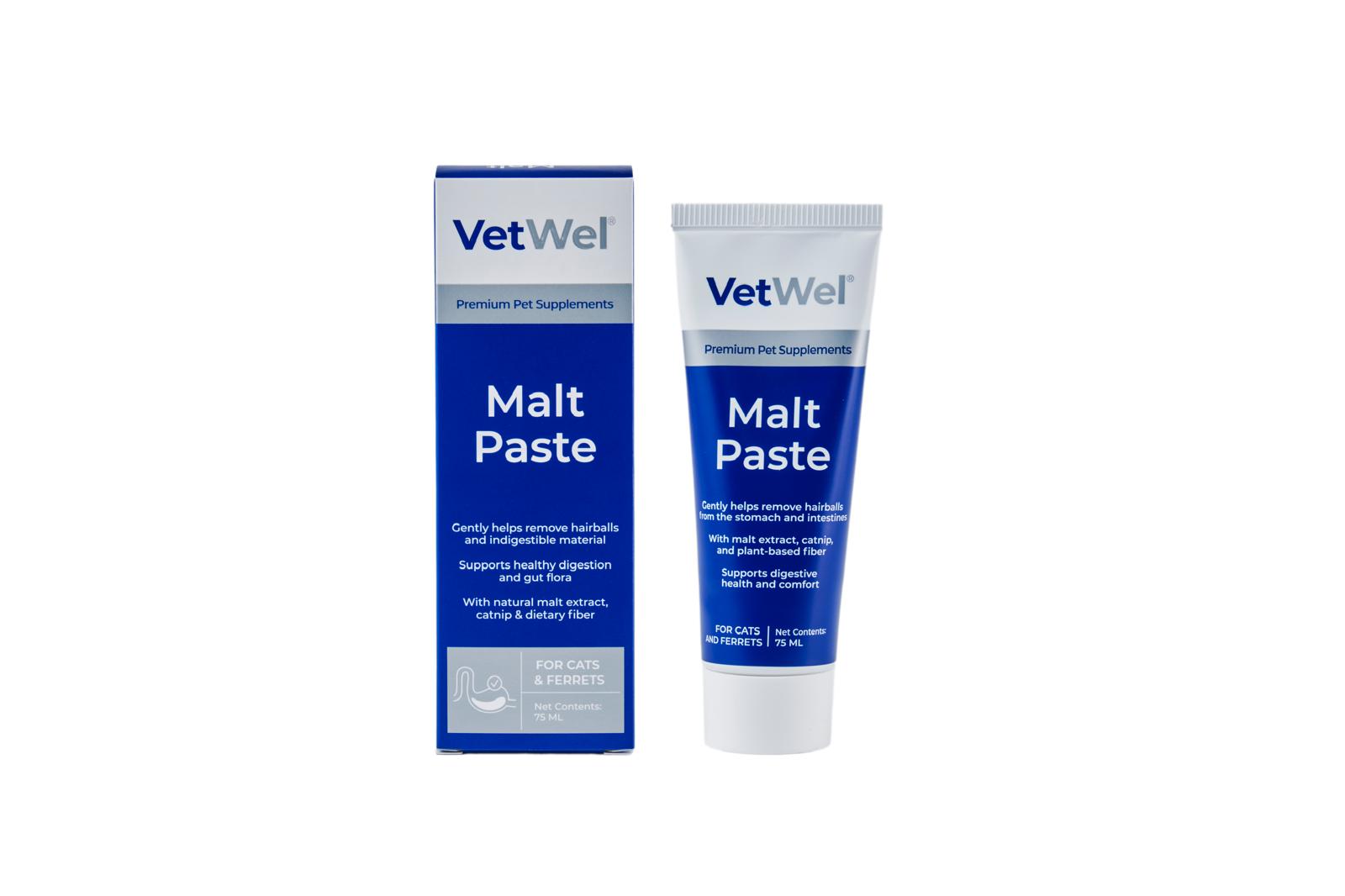
Developed primarily to help swallowed hair move through the gastrointestinal tract and be eliminated naturally in cats.
The oil-and-fiber combination supports movement of swallowed hair through the intestinal contents and natural elimination in the stool.
Plant fibers support normal stool bulk and gastrointestinal motility.
Corn dextrin provides a prebiotic substrate as part of the formula's intestinal-microbiota support approach.
Malt extract, protein hydrolysate, and catnip help support product acceptance and convenient daily use.
VetWel® Malt Paste is more than a lubricating malt product. It combines oil, fiber, and prebiotic support to address hair passage and normal intestinal function through complementary mechanisms.
Vegetable food oil, castor oil, and petrolatum oil provide lubricating and softening support to help facilitate natural passage of swallowed hair.
Plant food fibers support normal stool bulk and gastrointestinal motility.
Corn dextrin provides a prebiotic substrate intended to support intestinal microbiota.
Malt extract, protein hydrolysate, and catnip support convenient oral acceptance.
Recurrent vomiting, poor appetite, abdominal pain, inability to defecate, or deterioration in general condition should not automatically be attributed to hairballs. Foreign-body ingestion, constipation, obstruction, and other gastrointestinal conditions require veterinary assessment.
VetWel® Malt Paste is not a treatment for mechanical gastrointestinal obstruction.
Veterinary assessment is required before use when there is suspicion of a sharp foreign body, string or other linear foreign body, battery ingestion, magnet ingestion, gastrointestinal perforation, severe or recurrent vomiting, marked abdominal pain, inability to defecate, or gastrointestinal obstruction. Fresh drinking water should always be available.
Cats over 2 kg: 5 cm once daily.
Cats 2 kg or less: 2 cm once daily.
Kittens: 2 cm daily.
Ferrets: 2 cm daily.
The daily amount may be doubled when appropriate.
An approximately 1-month program may be used and repeated during spring/fall shedding periods as appropriate.
No routine fixed hairball dose is recommended for dogs. Consider use only in selected cases under veterinary guidance.
Refrigerate the opened tube.
VetWel® Malt Paste combines oils, fiber, and prebiotic ingredients to support the natural gastrointestinal passage of swallowed hair, normal intestinal motility, and intestinal microbiota, especially in cats. It should not be used as a substitute for veterinary assessment when gastrointestinal obstruction or dangerous foreign-body ingestion is suspected.